显示标签为“I5 4200u mini pc”的博文。显示所有博文

2016年6月5日星期日

New popular Pocket-Sized ‘Msecore Mini’ PC

A new PC in its ‘Msecore’ line of PCs is coming in the spring: the ‘Msecore 4200u Mini’.

The new box continues the distro’s long-standing partnership, which began with the release of the original Msecore PC back in 2012. That was followed the year after by the more powerful Msecore, a device which sold out in Europe on its Amazon debut last year.

Has it got what it takes to beat the super tiny $388.99 Intel Compute PC running Windows 10? Let’s take a look.i5-4200u 4g ram 128g ssd Mini PC

Msecore Mini Design

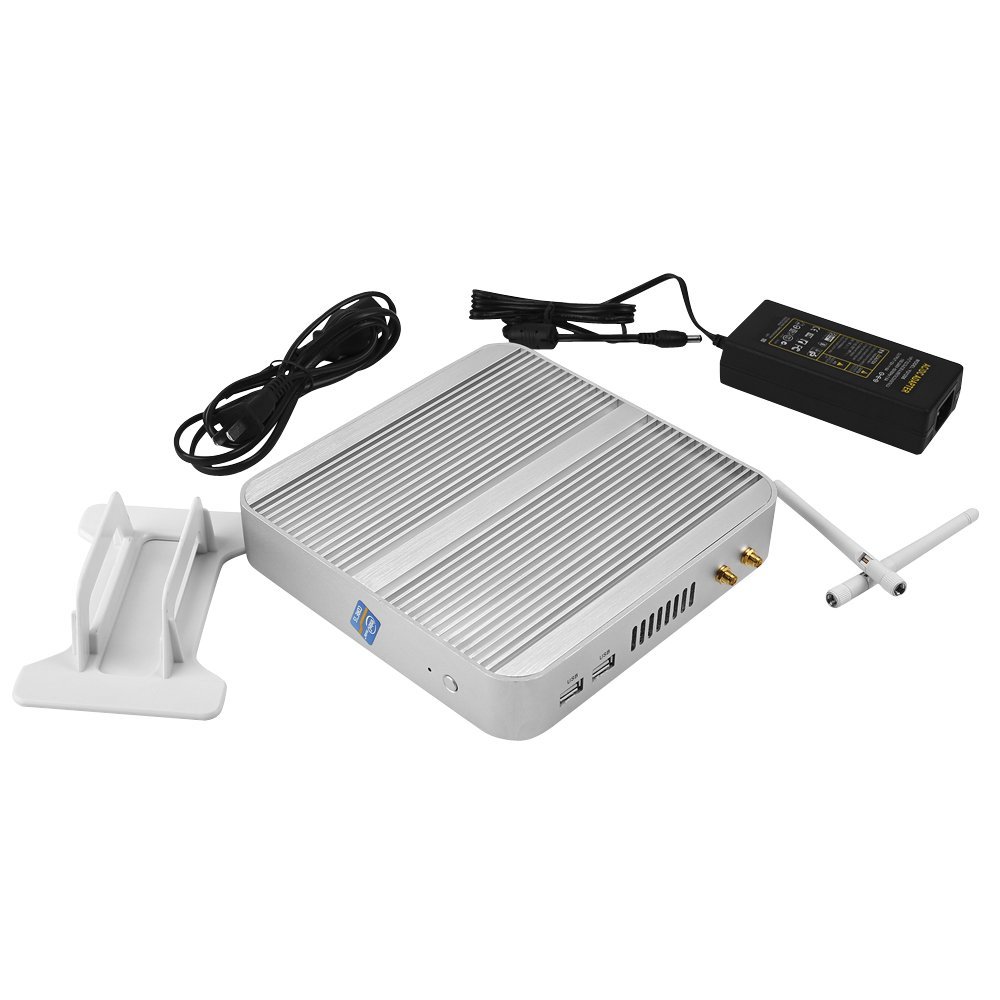
The Msecore Mini is five times smaller than the original Msecore and is barely an inch tall. Like previous editions, the new model is fanless, with the case design working as a passive cooling system.


If there’s a criticism to be levelled at the device it’s the utilitarian design. Previous Msecore models had a very distinctive look. The mini looks like an ADSL router wearing an aluminium shed.

Not that appearance matters too much in a device this tiny, but even so.

Msecore Mini Specs

The success of Chromeboxes has proven that big things really can come in very small packages. The Msecore Mini is no exception, offering twice the performance of the Msecore in a device able to slip into a pocket.

Inside it touts:

Intel i5 4200u CPU (Dual Core Turbo Boost 1.6GHz 3M Cache)

4GB RAM

128GB SSD

Ports and extensibility are well catered for. The device offers two USB 2.0 ports, four USB 3.0 ports, a pair of HDMI out sockets for dual-monitor setups, headphone/mic jack and a MicroSD card reader for expanding storage.

Connectivity includes integrated 802.11 b/g/n Wi-Fi and ethernet. There’s no mention of Bluetooth.

2016年5月31日星期二

Msecore Mini PC Makes Websites Available Offline

Msecore creates one of the world's cheapest PCs that the company hopes would allow modern technology to finally get into the hands of billions of people who cannot afford to buy computers.

Dubbed "Msecore Mini," the desktop computer boasts strong specs and features along with Internet access at a price that will absolutely make it an enticing venture in a number of developing regions.


"The hardware is not the reason people are buying it. This is the computer that people are buying instead of the nicest Mac in the world... because that thing is useless without the Internet. So it's the [applications], the feature set. With that said, the hardware is essentially a delivery mechanism, and it does it as fast as I need it to."

The former comes with 128 GB eMASA. Other features of the "Msecore" model PCs include Intel Celeron i5-4200u dual-core processor, 4 GB RAM, a pair of USB 2.0 ports, USB 3.0 port, 802.11n Wi-Fi, 3.5 mm audio jack and an integrated speaker.i5-4200u 4g ram 128g ssd Mini PC

2016年4月15日星期五

Mini-review: Intel Haswell i5-4200U Powered Msecore Protable Fanless Mini PC Host

The Core i5 version of the box is definitely faster than the Core i3 version. Especially if you were already considering the tall NUCs with 2.5-inch drive support, it's worth looking at the i3 version if gaming or CPU performance is especially important to you.i5-4200u Fanless Mini PC Host

That said, the idea of a performance-focused mini PC is a hard sell. It's only really justifiable if you want something as fast as possible that's also as small as possible—if size is more important, the Core i3 and i5 NUCs will do basically all of the same stuff for quite a bit less money. If performance is more important, a larger desktop will probably give you more bang for your buck. And then there's the still-much-faster Brix Pro, which at $600-ish isn't all that much more expensive than this one. Wait a couple of months and we'll probably see a Broadwell version of that, too.


The Core i5 NUC is a good thing, if only because it's nice to see Intel and others offering a wider variety of mini desktops. All three of the Broadwell NUCs—Core i3, i5, and i7—support similar features. All can drive a 4K display at 60Hz over DisplayPort, and all will accept fast PCI Express SSDs. All of them are tiny PCs with decent performance and power consumption for what they are. All of them help to scratch that system builder itch for people who don't really care to build their own hulking ATX desktops anymore. Decide what you'll use the NUC for—desktop workstation, HTPC, mini game console—pick the one that offers what you need, and go from there. You've got options.


The good

Small.
Upgradeable and expandable.
One-year warranty.
Quiet unless you're putting a lot of stress on it.
Good blend of size, performance, and power consumption if all these things are equally important to you.

Make sure you buy DDR3 if you want the box to live up to its full potential.

2016年4月5日星期二

What Makes Mini PCs so Small?Fanless Mini PC i5 Intel 4th Gen Intel Core I5-4200u

The end is nigh for the hulking tower PC. Computers are fitting into the size of your palm, some as small as thick pen drive. But what’s the technology that has taken them there, and are these mini PCs really good enough to be your primary computer?

As Moore’s Law sets in, hardware is becoming smaller and cheaper by the day. Meanwhile, as Wirth’s Law states, software development isn’t able to keep pace with hardware. The end result is that we have the same operating systems and programs of yesterday running smoothly on tinier versions of the computers they were built for.

A new generation of mescore mini PCs is making its way into our homes and offices now. These aren’t just media players, although mini PCs serve that purpose better than set top boxes and dedicated media players. The new lot of mini PCs are proper personal computers. Many of these run Windows, some operate Linux, and there are even a couple with Android-based desktop operating systems.

To understand the miniaturization of the PC, you need to know the basic parts of a computer. Over the years, most of these parts got smaller, integrated with other parts, or obsolete.

The big technological innovation came with the motherboard. From 2000 to 2007, hardware manufacturer VIA Technologies has made significant breakthroughs in motherboard size — minimizing the standard ATX and Micro ATX to three new sizes: Mini ITX, Nano ITX, and Pico ITX.

While the motherboard was miniaturized, at the same time, technologists were focussing on “integrated peripherals”. Basically, this means that components which were previously separate add-ons for a motherboard were not being scaled down, instead they were added directly onto the main PCB. The result was a modern motherboard came with all the bells and whistles: ethernet port, USB ports, Wi-Fi, Bluetooth, audio output, and other wireless and non-wireless standards.

The last few years have also seen the exclusion of an optical media drive from computers. Most people don’t use CDs or DVDs on a regular basis now, and there are plenty of alternatives to the optical disc that work better while taking up less space.

Finally, chip makers Intel and AMD started integrating the CPU and GPU into a single chip called the APU. Unlike AMD, Intel still refuses to call its modern line of processors “APUs”, but nomenclature aside, both companies are making the same thing. This means that you don’t need an external graphics card any more, and today’s APUs are good enough to even play new games, let alone any other needs that a regular user would have.


All of this miniaturization has now reached a point where a computer fits into the casing of an old thumbdrive. The new Intel Compute Stick turns any TV into a Windows PC.These devices are obviously not as powerful as the larger mescore mini PCs, but they do serve the same purpose: a proper, full-fledged desktop computer at a fraction of the size and cost.

Today, a mescore mini PC has several advantages over a full-sized desktop PC.

1.Size: Obviously, the biggest advantage is the amount of space you save. Even in a small 5 x 5-inch box, you will get the kind of power that a desktop PC would have had 1-2 years ago. The best part? That is enough for most users.

2.Power consumption: The hardware for a mini PC is made to run on less power. Gone are those bulky 600W power supply units! In fact, you can even build your own tiny, silent and green mescore mini PCs — although today, it makes more sense to buy one of Intel’s new NUC units, which we’ll get to in a bit.


3.Customizability: Most mescore mini PCs can be opened up just like a standard desktop PC, and you can swap or upgrade parts. In most cases, the motherboard and CPU/APU are difficult to upgrade, but the rest of the components like the hard drive and RAM can be changed as easily as your old tower.

4.Cost: Compared to laptops and full-sized PCs,mescore mini PCs are much more cost-effective to purchase and operate.

5.Design: Since manufacturers are building the mescore mini PC case with integrated power supply, motherboard, and CPU, they are able to experiment more freely with the design. So far, there have been some mescore cool mini PC models released, such as the Zotac ZBox Sphere and the Acer Revo One.

The Best Mini PCs You Can Buy Today Fanless mini pc i5 Intel 4th Gen Intel Core I5-4200u